

Parents in La Mesa work hard to help their kids build healthy habits, whether that means packing balanced snacks for school or setting a predictable bedtime. Oral care fits into that same rhythm. When children practice simple, repeatable routines at home, they tend to arrive at their dental visits with fewer cavities and more confidence. Families who visit La Mesa Pediatric Dentistry, located near Grossmont Center and just a short drive from Lake Murray Boulevard, often ask how they can make brushing and flossing feel easier for their kids. The recommendations below come straight from what pediatric dentists see every day in the exam room and what tends to make the biggest difference for growing smiles.
The guidance centers on three themes: Starting Early: The Foundation of Good Oral Health, Age-Appropriate Brushing Techniques, and Making Oral Hygiene Fun and Engaging. Each plays a distinct role in helping children understand that caring for their teeth is simply part of taking care of themselves. If you are new to the area or looking for a Pediatric Dentist in La Mesa, these tips offer a reliable starting point while giving you a sense of how local clinicians approach long-term prevention.
Starting Early: The Foundation of Good Oral Health
Parents often hear that early childhood is a critical window for healthy habits, and dentistry is no exception. Pediatric specialists usually recommend a child’s first dental visit by their first birthday or within six months of the first tooth appearing. That timeline surprises some families, but there is a practical reason behind it. When children begin visiting a dentist before age two, studies show they tend to experience fewer restorative procedures later because problems are caught early and parents receive tailored guidance during those important toddler years.
In La Mesa, many parents schedule that first appointment around the same time they introduce solid foods or transition away from bottles. Those milestones come with new feeding patterns, and early visits help families understand how those patterns can influence dental development. During that first visit, a pediatric dentist evaluates the gums, checks for early enamel changes and discusses daily routines, including how often a parent should lift the child’s lip to check for plaque buildup. The appointment is short, but it creates a baseline that guides future care.
Starting early also means creating predictable home routines. Instead of treating brushing as a task squeezed in at the end of a busy night, it helps to set a consistent time, such as right after the bath or before reading a bedtime story. Children pick up on that predictability. Parents in La Mesa often share that once brushing becomes part of the family rhythm, kids resist it less and even remind older siblings to join in.
Early oral care isn’t only about the teeth children already have. Baby teeth act as placeholders for adult teeth, supporting speech development and helping maintain proper spacing. When a cavity forms in a baby tooth and progresses too far, it may need a filling or crown. In rare cases, a severely damaged baby tooth could require removal, which can affect how nearby teeth shift into place. By starting early, parents give their children a stronger foundation that benefits not just the present but also the alignment and esthetics of the future adult smile.
Age-Appropriate Brushing Techniques That Make a Real Difference
Every stage of childhood comes with new motor skills, new curiosity and new challenges. Brushing techniques that work for a toddler will not be the same ones that help a nine-year-old keep plaque under control. Pediatric dentists tailor their guidance based on age because proper technique develops slowly, much like writing or tying shoes.
Toddlers and Preschoolers
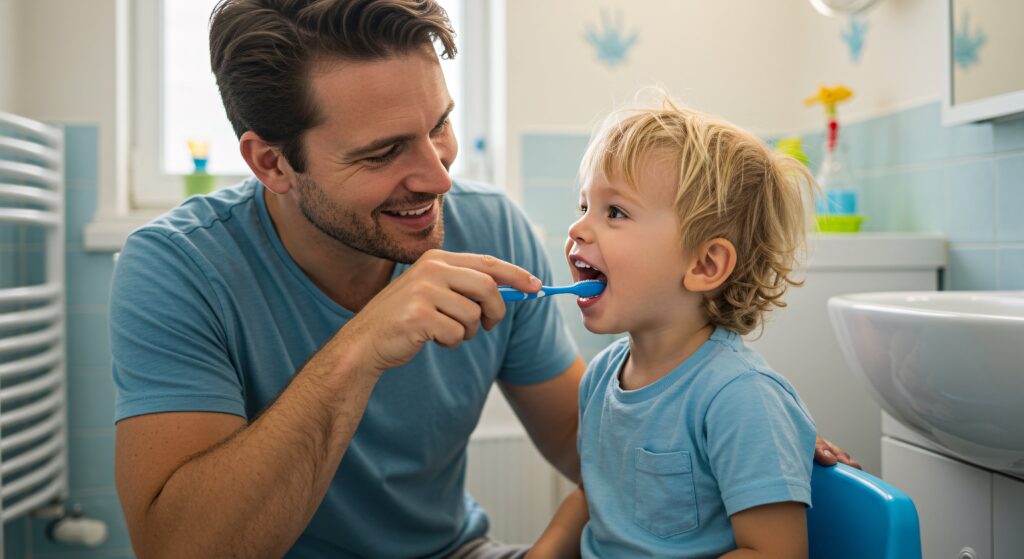
In the early years, children rely almost entirely on an adult to clean their teeth. A soft, child-sized brush and a thin smear of fluoride toothpaste are usually recommended. Parents can position the child seated on their lap or standing in front of a mirror while the parent gently controls the brushing motion. A small circular motion along the gumline helps remove plaque more effectively than quick back-and-forth strokes.
This hands-on support continues longer than many parents realize. Most children lack the dexterity to brush well on their own until around age six or seven. Pediatric dentists often use the “shoe-tying rule”: if a child cannot tie their shoes, they still need an adult to finish brushing.
Early School-Age Children
By the time children at local elementary schools like Lemon Avenue or La Mesa Dale reach first or second grade, they can handle more of the brushing process but still benefit from guidance. Parents can ask them to brush for the length of a favorite short song or set a visible two-minute timer. Encourage slow, controlled brushing that reaches every surface, including the chewing surfaces of molars where plaque tends to settle.
At this age, many kids enjoy electric toothbrushes with soft bristles. The consistent vibration helps them clean more thoroughly with less effort, though they should still let the brush glide slowly across each tooth rather than scrubbing quickly. A pea-sized amount of fluoride toothpaste is usually appropriate once a child consistently spits rather than swallows.
Tweens and Pre-Teens
Older children have the coordination to brush independently, but they also juggle schoolwork, sports and social activities. It’s common for the quality of their brushing to dip during this stage. Pediatric dentists encourage parents to check in periodically, especially if braces or orthodontic appliances are involved. Orthodontic treatment creates new nooks around brackets where plaque can accumulate. Clear instructions, such as angling the toothbrush toward the brackets, can help teens keep their teeth healthier during these years.
Flossing becomes more important around this age. If floss picks make it easier for a child to clean between teeth, those are acceptable alternatives to traditional string floss. The goal is consistency. Once flossing is part of the nighttime routine, teens tend to keep the habit into adulthood.
Making Oral Hygiene Fun and Engaging
Children respond to routines that feel playful and attainable. A few small adjustments at home can turn brushing time into something a child looks forward to rather than something they resist.
One approach is to give your child a sense of ownership. Parents in La Mesa often let their kids choose their own toothbrush at neighborhood stores near Baltimore Drive or Fletcher Parkway. Something as simple as picking a brush with a favorite color or character can motivate a child to be more involved.
Using visual cues also helps. A progress chart taped to the bathroom mirror or a digital timer on a smartphone creates structure without pressure. Some families use music. A two-minute song that starts and ends brushing time adds predictability and makes the routine feel less like an obligation.
Storytelling can work especially well for young kids. Parents sometimes create short, imaginative stories about “sugar bugs” that hide on teeth, and the toothbrush becomes the hero that helps clean them away. The story does not need to be elaborate. The goal is simply to help children understand why brushing matters.
For older children, engagement often comes from understanding the real-world impact of their choices. Showing them photographs or models during a dental visit helps them see how plaque affects gums or why flossing prevents tight spaces from developing decay. When children understand the “why,” they rarely need reminders as often.
Of course, fun alone is not enough. That is why pediatric dentists recommend tying these playful elements to a consistent structure. Morning and evening routines should stay roughly the same each day, even during vacations or school breaks. When routines stay steady, kids feel secure and are more willing to maintain good habits.
Beyond Brushing: Complete Oral Care at Home
Establishing a strong routine involves more than brushing and flossing. Pediatric dentists talk about Beyond Brushing: Complete Oral Care because diet, hydration and habits all influence dental health in a meaningful way.
Many families in La Mesa pack lunches for school, and simple adjustments can reduce cavity risk. Including crisp fruits or vegetables, such as apples or celery, helps clear some plaque during the day. Limiting sticky snacks like gummies or fruit-filled bars is also helpful because those foods tend to cling to grooves in the teeth. Drinks matter as much as snacks. Water, especially tap water with fluoride, helps rinse away sugars and supports enamel strength.
Hydration plays a role that many families overlook. Children who sip water throughout the day maintain healthier saliva flow. Saliva naturally protects teeth. It neutralizes acids, washes away food particles and delivers essential minerals to tooth surfaces. Encouraging kids to bring a refillable water bottle to school or sports practice is a simple way to reinforce that habit.
Finally, pediatric dentists encourage parents to be mindful of nighttime routines. If a child drinks milk before bed, brushing should happen afterward. Milk contains natural sugars that can contribute to decay if left on the teeth overnight. For infants and toddlers, avoiding bottles or sippy cups in bed is especially important because the pooling of liquid around the teeth can contribute to early childhood cavities.
When to Check In With a Pediatric Dentist in La Mesa
Even with consistent routines at home, professional care remains an essential part of prevention. Most children benefit from checkups twice a year, though some may need appointments more often if they have a higher cavity risk or orthodontic concerns. Regular dental visits help track growth, monitor spacing and identify emerging issues before they become uncomfortable.
Families in La Mesa appreciate having a pediatric practice close to home because convenience makes it easier to keep appointments consistent. Short visits every six months give parents an opportunity to ask questions, adjust routines and receive guidance tailored to their child’s stage of development.
If you notice any changes between visits, such as sensitivity to cold, a dark spot on a tooth or bleeding during brushing, it is worth scheduling an appointment. Pediatric dentists prefer to address small problems early, often with simple, noninvasive solutions.
Schedule a Visit with La Mesa Pediatric Dentistry
Supporting your child’s oral health starts with small daily routines, but professional guidance helps those routines grow stronger over time. If you would like personalized recommendations or you are looking for a Pediatric Dentist in La Mesa, the team at La Mesa Pediatric Dentistry is here to help your family build healthy habits that last.
To learn more or book an appointment, simply Schedule a Visit with La Mesa Pediatric Dentistry. The office welcomes families from throughout La Mesa, nearby neighborhoods like Grossmont and surrounding East County communities. Your child’s healthy smile begins with a foundation of early, consistent and engaging care, and local pediatric specialists are ready to support you every step of the way.